

A building’s facade is constantly exposed to Singapore’s tropical weather. Rain, humidity, sunlight, airborne pollutants, dust, algae, mould and other contaminants can gradually leave exterior surfaces stained, discoloured and difficult to maintain.
Regular facade cleaning in Singapore can help keep commercial and residential buildings looking presentable while supporting a broader building maintenance programme. Professional cleaning is particularly important for high-rise buildings and properties with glass, marble, stone, tiles, metal cladding and other exterior finishes that require specialised cleaning methods.
However, facade cleaning should not be confused with statutory facade inspections. Building owners may also have obligations under Singapore’s Periodic Facade Inspection (PFI) regime, which is administered by the Building and Construction Authority (BCA).
In this guide, we explain what facade cleaning involves, how it relates to BCA requirements, common cleaning methods, factors affecting cost and how to choose a professional facade cleaning company in Singapore.
What Is Facade Cleaning?
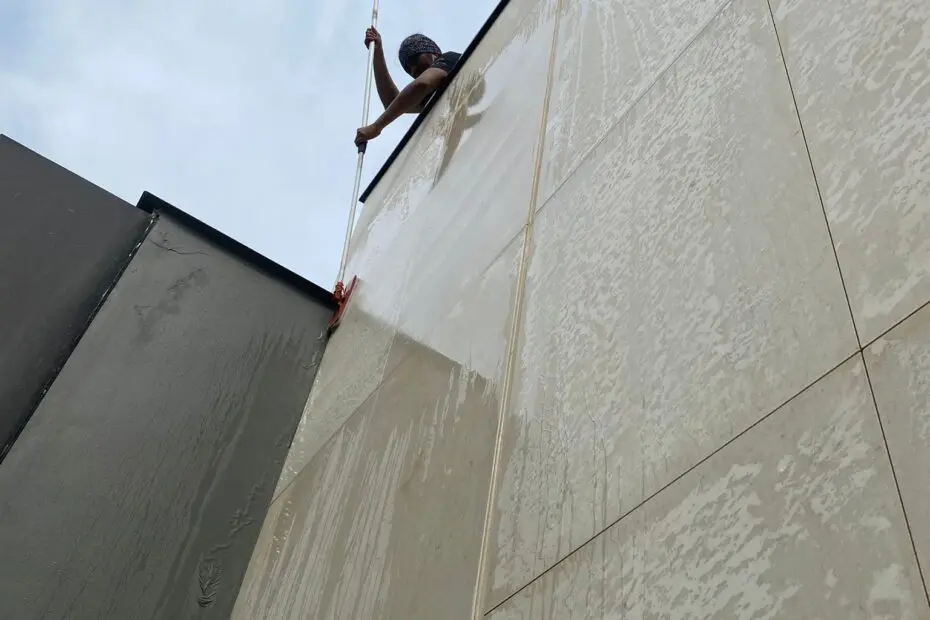
Facade cleaning is the professional cleaning of a building’s exterior surfaces to remove dirt, grime, stains, biological growth and other contaminants.
Depending on the building, facade cleaning may involve cleaning:
- Glass
- Marble
- Granite
- Natural stone
- Tiles
- Metal cladding
- Composite panels
- Concrete
- Other exterior surfaces
The appropriate cleaning technique depends on the material, condition of the facade, type of contamination and accessibility of the building.
For example, a cleaning method suitable for a durable exterior surface may not be appropriate for delicate natural stone or certain types of cladding. Using excessive pressure or unsuitable chemicals can potentially damage surfaces, which is why professional assessment is important.e.
Why Is Facade Cleaning Important in Singapore?
Singapore’s hot, humid and rainy climate creates conditions where dirt, moisture and biological growth can accumulate on building exteriors.
Professional facade cleaning can provide several benefits.
1. Removes Dirt and Grime
Dust, pollution and other airborne particles can gradually accumulate on exterior surfaces. If they are left untreated, they can make a building appear dirty and neglected.
Regular cleaning removes this buildup and restores a cleaner appearance.
2. Helps Manage Mould and Algae Growth
Moisture and humidity can contribute to the growth of algae, mould and other organic contaminants on suitable surfaces.
Cleaning helps remove visible biological buildup and can form part of a property’s wider maintenance programme.
3. Maintains the Appearance of the Building
The facade is one of the first parts of a building that visitors, customers, tenants and members of the public see.
A clean exterior can create a more professional appearance for:
- Office buildings
- Hotels
- Shopping centres
- Condominiums
- Retail properties
- Commercial developments
- Industrial buildings
4. Supports Long-Term Facade Maintenance
Facade cleaning is only one part of building maintenance, but regular cleaning can help property owners monitor the condition of exterior surfaces.
During cleaning, visible issues such as unusual staining, cracks, damaged finishes or deterioration may also become easier to identify and refer for further assessment.
It is important to note that cleaning does not replace a professional facade inspection or structural assessment.
5. Helps Preserve Exterior Surfaces
Different facade materials respond differently to environmental exposure.
Removing accumulated contaminants using an appropriate cleaning method can help maintain the appearance and condition of exterior finishes over time.
Does Facade Cleaning Help With BCA Compliance?
Facade cleaning and BCA’s Periodic Facade Inspection (PFI) are two different things.
BCA states that building owners must keep building facades safe and well-maintained. The PFI regime, which has been effective since January 2022, is intended to identify and address facade deterioration and protect occupants and the public.
Under the current PFI requirements, buildings over 20 years old generally need to undergo inspection every seven years, subject to specific exceptions. When a building owner receives a PFI notice, the owner must appoint a Competent Person (CP) to conduct the inspection and ensure that identified defects are addressed.
Therefore, hiring a facade cleaning company does not by itself fulfil a building’s PFI requirements or make the building BCA compliant.
Instead, professional facade cleaning can complement a broader building maintenance programme by helping owners keep exterior surfaces clean and well-maintained.ability.
What Is Periodic Facade Inspection (PFI)?
Periodic Facade Inspection is a regulatory inspection regime designed to identify facade deterioration and help maintain the safety of building facades.
BCA states that the building owner is responsible for appointing a Competent Person to conduct the PFI. A Facade Inspector may assist with visual or close-range inspection work under the direct supervision and control of the Competent Person.
The inspection process can identify facade defects that require attention, and building owners are responsible for ensuring that identified defects are repaired promptly.
Which Buildings Need Periodic Facade Inspection?
Under BCA’s current guidance, buildings over 20 years old must generally undergo PFI every seven years, subject to specified exceptions. Building owners should refer to BCA’s latest requirements to determine whether their property falls within the applicable PFI criteria.
Who Conducts a Periodic Facade Inspection?
A PFI is conducted by a qualified Competent Person (CP). The CP may appoint a Facade Inspector (FI) to assist with inspection work, but the FI operates under the CP’s direct supervision and control.
This distinction is important when selecting a contractor. A facade cleaning contractor and a PFI professional perform different roles.
What Happens When Facade Defects Are Found?
When defects are identified during a PFI, the building owner must ensure that the necessary remedial works are carried out.
Depending on the nature of the problem, this may involve engaging appropriate specialists or contractors to repair or restore affected facade components.
Facade cleaning can form part of ongoing maintenance, but it should not be presented as a substitute for required inspection or remedial works.
Does NEA Require Facade Cleaning?

The answer depends on the type of premises and the specific regulatory requirements that apply.
The National Environment Agency (NEA) has established environmental sanitation requirements and cleaning guidelines for certain premises. For specified premises under the Environmental Sanitation Regime, requirements include routine cleaning and disinfection, periodic thorough cleaning, surface maintenance, inspections and other measures.
However, these requirements should not be interpreted as a blanket rule that every building in Singapore must have its facade professionally cleaned.
For property owners, the better approach is to understand the specific requirements applicable to their premises and maintain an appropriate cleaning and maintenance programme.
NEA also provides guidelines covering environmental cleaning and disinfection practices for premises, with an emphasis on appropriate cleaning methods, equipment and safety measures.
Common Problems That Require Professional Facade Cleaning

Over time, different types of contaminants can affect a building’s exterior.
Dirt and Grime
General dirt and dust can accumulate across large facade areas, particularly on buildings located in busy urban environments.
Mould and Algae
Persistent moisture and humidity can contribute to biological growth, resulting in green, black or discoloured patches.
Water Stains and Mineral Deposits
Rainwater and repeated exposure to moisture can leave visible marks or mineral deposits on some exterior materials.
Pollution and Soot
Buildings near busy roads or other sources of airborne pollutants can experience greater levels of exterior dirt and staining.
Bird Droppings
Bird droppings can create visible stains and may become increasingly difficult to remove if left untreated.
Discolouration
Some surfaces can become dull or discoloured because of prolonged environmental exposure and contamination.
Stubborn Stains on Stone and Marble
Natural stone and marble require particular care because inappropriate cleaning products or techniques can damage the surface or affect its finish.
Facade Cleaning Methods
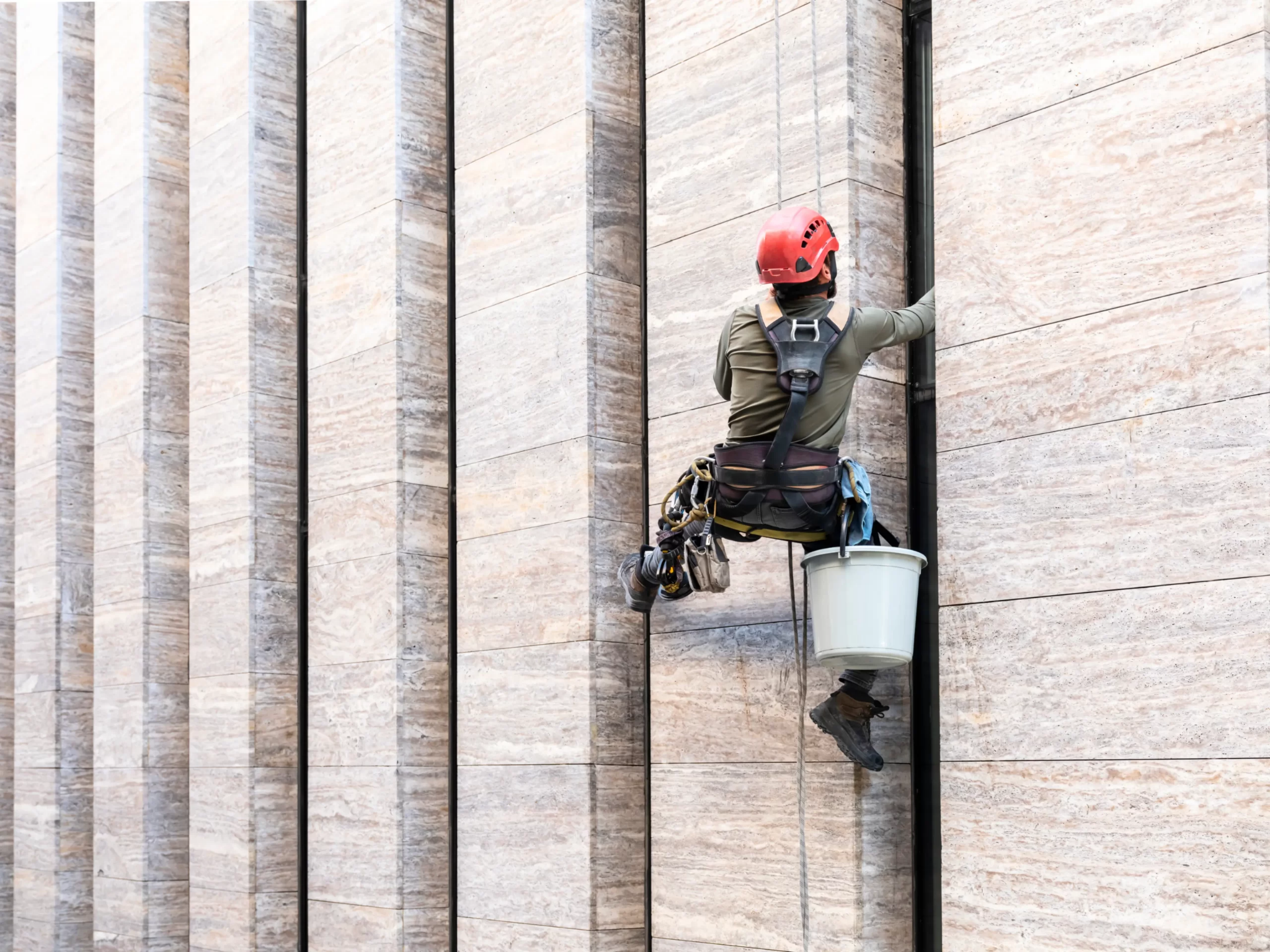
There is no single cleaning method suitable for every building.
A professional contractor should assess the facade material and condition before determining the most appropriate approach.
Pressure Washing
Pressure washing uses pressurised water to remove dirt and contaminants from suitable exterior surfaces.
The pressure level should be carefully controlled according to the surface being cleaned. Excessive pressure can potentially damage delicate materials, finishes or joints.
Soft Washing
Soft washing uses lower water pressure together with suitable cleaning solutions to remove contaminants.
It can be useful where high-pressure cleaning may be inappropriate for the surface.
Chemical Cleaning
Specialised cleaning solutions may be used to treat particular types of stains or contamination.
The cleaning product should be selected according to the facade material and the type of stain. Incorrect chemicals can cause discolouration or surface damage.
Glass Facade Cleaning
Glass facades can accumulate dust, watermarks, pollution and other contaminants.
Professional glass facade cleaning can help restore clarity and maintain the appearance of large glass surfaces.
Stone and Marble Facade Cleaning
Natural stone and marble require specialised treatment.
Cleaning should take into account:
- Stone type
- Surface finish
- Existing stains
- Porosity
- Previous treatments
- Appropriate cleaning chemicals
- Water pressure
A professional assessment helps reduce the risk of using an unsuitable cleaning method.
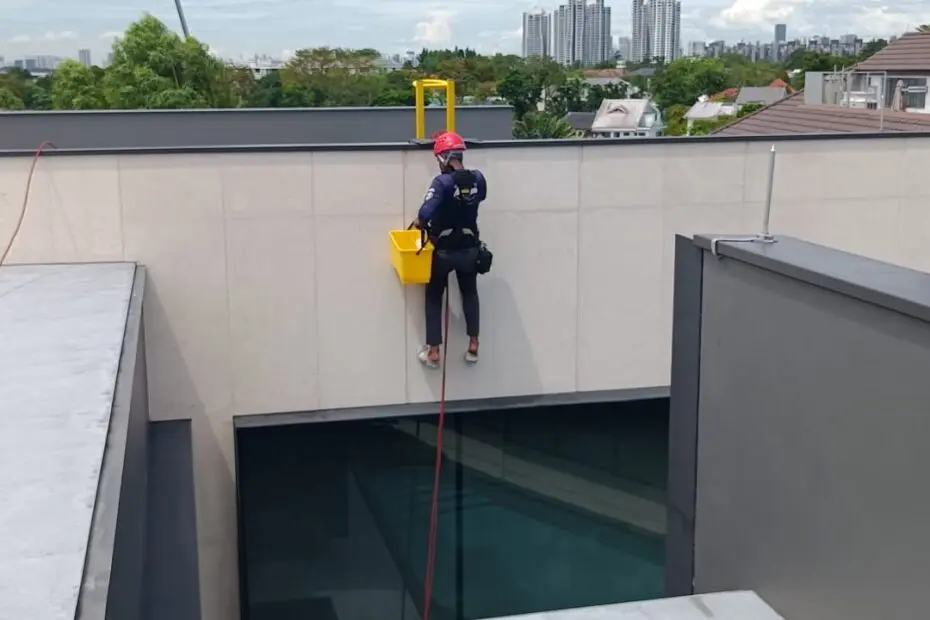
High-Rise Facade Cleaning
High-rise buildings present additional challenges because exterior surfaces may be difficult to access.
Depending on the building, cleaning may require specialised access equipment and safety procedures.
For high-rise properties, building owners should engage experienced professionals who can plan the work around the building’s height, facade design, accessibility and site conditions.ult.
How Professional Facade Cleaning Works
A professional facade cleaning project should begin with an assessment rather than immediately applying a cleaning method.
Step 1: Site Inspection and Assessment
The contractor assesses:
- Facade material
- Surface condition
- Type and severity of staining
- Accessibility
- Building height
- Required equipment
- Potential worksite risks
This allows the cleaning approach to be selected according to the property’s specific requirements.
Step 2: Safety Preparation and Setup
Facade cleaning can involve working at height and around occupied buildings.
Before work begins, the appropriate safety measures, access arrangements and worksite controls should be established.
Step 3: Select the Appropriate Cleaning Method
The cleaning method should be matched to the facade.
For example, a robust exterior surface may tolerate a different treatment from delicate marble, natural stone or specialised cladding.
Step 4: Professional Facade Cleaning
The selected method is then applied to remove dirt, stains, biological growth and other contaminants.
The objective is to achieve effective cleaning while minimising the risk of damaging the underlying facade material.
Step 5: Final Quality Inspection
After cleaning, the facade should be inspected to assess the overall result and identify areas that may require additional treatment.
This final check helps ensure that the cleaning work has been completed consistently across the relevant surfaces.
How Often Should a Building Facade Be Cleaned?
There is no universal cleaning frequency that applies to every building.
The appropriate schedule can depend on:
- Building location
- Building height
- Facade material
- Exposure to rain
- Exposure to pollution
- Nearby construction activity
- Biological growth
- Amount of dirt accumulation
- Building type
- Existing maintenance programme
Instead of relying on an arbitrary cleaning interval, property owners should assess the actual condition of their facade and establish a maintenance schedule based on the property’s requirements.
Signs Your Building May Need Facade Cleaning
Look out for:
- Visible dirt and grime
- Dark streaks
- Green or black biological growth
- Watermarks
- Mineral deposits
- Bird droppings
- Surface staining
- Discolouration
- A visibly dull facade
- Dirt that is becoming increasingly difficult to remove
If these problems are becoming noticeable across a building’s exterior, it may be time to arrange a professional facade assessment.
How Much Does Facade Cleaning Cost in Singapore?
The cost of facade cleaning can vary significantly from one property to another.
A professional contractor will typically need to consider the building’s size, height, materials, condition, accessibility and required cleaning method before providing a quotation.
Factors That Affect Facade Cleaning Prices
| Factor | Why It Matters |
| Building height | High-rise buildings may require specialised access equipment |
| Facade area | Larger surfaces generally require more labour and resources |
| Surface material | Different materials require different cleaning techniques |
| Surface condition | Heavy staining or biological growth may require additional treatment |
| Accessibility | Difficult-to-reach areas can increase project complexity |
| Cleaning method | Equipment, labour and cleaning products vary by application |
| Safety requirements | Working at height requires appropriate planning and safety controls |
Because of these variables, a site assessment is generally more useful than relying on a generic per-square-metre price.
Property owners should request a quotation based on the actual building and scope of work.
Facade Cleaning for Different Types of Buildings
Professional facade cleaning can be relevant to a wide range of properties.
Commercial Buildings
Clean facades can help commercial properties maintain a professional appearance for customers, tenants and visitors.
Office Buildings
Regular exterior maintenance can contribute to a well-maintained corporate environment.
Condominiums and Residential Developments
Condominium facades are exposed to the same environmental conditions as other buildings and may require periodic cleaning to manage dirt, stains and biological growth.
Hotels
A clean exterior can contribute to the overall first impression of a hotel.
Retail and Shopping Centres
High-traffic commercial properties can benefit from regular exterior maintenance to keep visible areas clean and presentable.
Industrial Buildings
Industrial properties can experience additional dust, dirt and environmental contamination depending on their location and surrounding activities.
Facade Cleaning vs Facade Inspection vs Facade Repair
These services are related, but they serve different purposes.
| Service | Main Purpose |
| Facade Cleaning | Removes dirt, stains, grime and surface contaminants |
| Facade Inspection | Identifies deterioration, defects and potential safety issues |
| Facade Repair | Repairs damaged or defective facade components |
| Facade Restoration | Restores deteriorated surfaces or finishes |
| Facade Maintenance | Covers ongoing activities required to maintain the building exterior |
This distinction is particularly important when discussing BCA requirements.
Facade cleaning is not the same as Periodic Facade Inspection.
A building owner may need both cleaning and inspection as part of a wider approach to facade maintenance, but the services should not be treated as interchangeable.
Why Choose Professional Facade Cleaning Instead of DIY Cleaning?
Cleaning a large building facade is significantly different from cleaning a residential window or wall.
Professional facade cleaning can provide several advantages.
Improved Safety
Working at height presents risks that require appropriate equipment, planning and safety procedures.
Specialist Equipment
Professional contractors can use equipment suited to the building’s height, facade material and access requirements.
Appropriate Cleaning Techniques
Different materials require different approaches. Professionals can select methods based on the surface being treated.
Reduced Risk of Surface Damage
Using excessive pressure or unsuitable chemicals can potentially damage certain facade materials.
Professional assessment helps reduce this risk.
Access to Difficult Areas
Specialised equipment and access techniques can allow professionals to clean areas that are difficult or unsafe for building occupants or general cleaners to reach.
More Consistent Results
Large facades require consistent treatment across extensive surface areas. Professional cleaning can provide a more systematic approach.
Why Choose Marble Furnishing for Facade Cleaning in Singapore?

Marble Furnishing’s facade cleaning service can help property owners maintain the appearance and condition of their building exteriors.
The service is designed for different exterior surfaces, including glass, stone, metal cladding, tiles and composite panels.
Facade Cleaning for Different Surface Types
Different facade materials require different cleaning approaches.
Marble Furnishing can assess the surface and determine an appropriate cleaning method based on the material and condition of the facade.
Professional Site Assessment
Before cleaning begins, assessing the facade can help identify the appropriate equipment, cleaning technique and work requirements.
Surface-Specific Cleaning
Rather than applying one cleaning method to every surface, the cleaning approach can be adapted according to the facade material and type of contamination.
Safety-Focused Work
Facade cleaning can involve difficult-to-access areas and working at height. Proper planning and safety considerations are therefore important components of professional facade cleaning.
Quality Workmanship
A final inspection helps ensure that the completed work meets the required cleaning standard.
For property owners looking for facade cleaning services in Singapore, engaging an experienced contractor can make it easier to establish the right cleaning approach for the building.
Frequently Asked Questions About Facade Cleaning in Singapore
What is facade cleaning?
Facade cleaning is the professional cleaning of a building’s exterior surfaces to remove dirt, grime, stains, biological growth and other contaminants.
How often should a building facade be cleaned?
There is no fixed frequency for every building. Cleaning requirements depend on factors such as facade material, building location, exposure to pollution and weather, building height and the amount of dirt or biological growth.
How much does facade cleaning cost in Singapore?
The cost depends on factors including building height, facade area, surface material, condition, accessibility, cleaning method and safety requirements. A site assessment is usually required to provide an accurate quotation.
Is facade cleaning required by BCA?
Facade cleaning itself is not the same as BCA’s Periodic Facade Inspection regime. BCA requires building owners to keep facades safe and well-maintained, while qualifying buildings are subject to PFI requirements.
Does facade cleaning make a building BCA compliant?
No. Professional facade cleaning does not replace a required Periodic Facade Inspection. PFI must be carried out by the appropriate Competent Person under BCA’s requirements.
What is Periodic Facade Inspection?
PFI is a BCA regime designed to identify facade deterioration and help ensure building facades remain safe. Buildings over 20 years old generally require inspection every seven years, subject to applicable exceptions.
What surfaces can be professionally cleaned?
Depending on the contractor and cleaning method, facade cleaning can be performed on surfaces such as glass, natural stone, marble, granite, tiles, metal cladding and composite panels.
Can marble and natural stone facades be cleaned?
Yes. However, natural stone and marble require appropriate cleaning methods because unsuitable chemicals or excessive pressure may damage the surface or affect its finish.
How are high-rise building facades cleaned?
High-rise facade cleaning may require specialised access equipment, work-at-height procedures and appropriate safety controls. The exact method depends on the building’s height, design, facade material and accessibility.
How long does facade cleaning take?
The duration varies depending on the size of the facade, building height, surface condition, accessibility and cleaning method required. A site assessment can provide a more accurate estimate.
How do I choose a facade cleaning company in Singapore?
Look for a contractor with experience in the relevant facade materials, appropriate equipment, suitable safety procedures and a clear process for assessing the building before cleaning.
Keep Your Building Facade Clean and Well Maintained
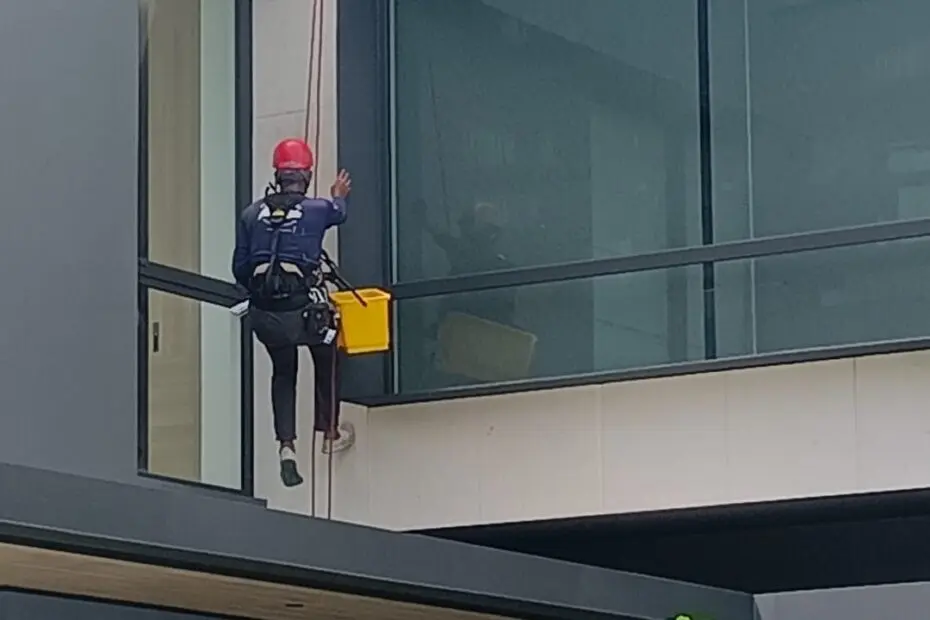
A building’s facade is constantly exposed to Singapore’s weather and surrounding environment. Dirt, pollution, water stains, algae, mould and other contaminants can gradually affect its appearance and make exterior maintenance more difficult.
Regular professional facade cleaning in Singapore can help property owners maintain cleaner and more presentable building exteriors while supporting a wider facade maintenance programme.
At the same time, building owners should understand that facade cleaning is different from BCA’s Periodic Facade Inspection. Qualifying buildings must meet the applicable PFI requirements and engage the appropriate Competent Person for inspection.
If your building’s exterior is showing signs of dirt, staining, biological growth or general deterioration, consider arranging a professional assessment before the problem becomes more difficult to manage.
Looking for professional facade cleaning services in Singapore? Contact Marble Furnishing to discuss your building’s facade cleaning requirements and request a quotation.