

Microcement has become increasingly popular in Singapore for homeowners, interior designers, and commercial property owners looking for a seamless, contemporary surface with a distinctive concrete-like appearance.
Unlike traditional concrete, microcement is applied as a thin decorative coating over a suitable existing surface. This makes it possible to achieve a smooth, joint-free finish across floors, walls, bathrooms, kitchens and other surfaces without the thickness and structural requirements associated with conventional concrete.
But is microcement suitable for your Singapore property? How much does microcement cost? Is it waterproof? Can it be applied over existing tiles? And how does it compare with alternatives such as cement screed, tiles and vinyl?
This guide covers everything you need to know about microcement in Singapore, including its benefits, limitations, applications, installation process, maintenance and cost.
Need help installing Microcement in Singapore?
Get a Free Quote Today with Marble Furnishing!
Address: 2 Kallang Pudding #08-15 (Mactech Building), Singapore 349307
Email: info@marblefurnishing.com
Contact No:
+(65) 6570 1723 – HQ
+(65) 9424 2461 – Henry
+(65) 9644 3388 – Alvin
What Is Microcement?

Microcement, also known as micro-cement or micro cement, is a decorative cement-based coating made using materials such as cement, fine aggregates, polymers and pigments.
It is applied in several thin layers to create a continuous surface. Depending on the product system and application, the finished coating is typically only a few millimetres thick.
The appropriate cleaning technique depends on the material, condition of the facade, type of contamination and accessibility of the building.
The material is usually hand-applied, which gives microcement its characteristic organic and slightly varied appearance. Rather than producing a completely uniform surface like a manufactured tile, microcement can have subtle differences in tone, texture and movement.
Once properly sealed, microcement creates a durable decorative surface suitable for a variety of residential and commercial applications.
What Makes Microcement Different From Traditional Concrete?
Traditional concrete is a structural material that is generally much thicker and requires appropriate structural support.
Microcement, on the other hand, is a thin decorative finish. It is designed to be installed over a properly prepared substrate rather than replacing the structural floor itself.
This thin application is one reason microcement is attractive for renovation projects, particularly where homeowners want to update an existing surface without significantly increasing floor height.
Why Is Microcement Popular in Singapore?

Microcement has several characteristics that make it appealing for Singapore homes and commercial spaces.
1. Seamless, Grout-Free Finish
One of the biggest advantages of microcement is its seamless appearance.
Traditional tiles have grout lines that divide the floor or wall into individual sections. Microcement eliminates these visible joints, creating a continuous surface that can make a space feel cleaner and more visually spacious.
This can be particularly useful in smaller HDB flats, condominiums, and apartments.
2. Modern and Versatile Appearance
Microcement can complement a range of interior styles, including:
- Minimalist
- Industrial
- Contemporary
- Japandi
- Scandinavian
- Wabi-sabi
- Modern luxury
Colours can range from classic concrete grey to warmer shades such as beige, sand, cream and earthy tones.
3. Suitable for Different Surfaces
Depending on the product system and substrate, microcement can be used on more than just floors.
Common applications include:
- Floors
- Walls
- Bathrooms
- Shower areas
- Kitchens
- Countertops
- Staircases
- Feature walls
- Commercial interiors
4. Can Be Used as an Overlay
One of the main attractions of microcement for renovations is its ability to be applied over suitable existing surfaces.
Instead of completely removing an existing finish, a contractor may be able to prepare the existing surface and install the microcement system over it.
However, this does not mean every existing floor or wall is automatically suitable. The condition, stability, levelness, and moisture characteristics of the substrate must be assessed before installation.
Where Can Microcement Be Used?
Microcement Flooring
Microcement flooring is one of the most popular applications.
Its seamless appearance works particularly well in open-plan living rooms, dining areas and other spaces where homeowners want the same finish to flow from one area to another.
It can also be used in bedrooms, hallways and selected commercial spaces.
Microcement Walls
Microcement can be used to create feature walls or a complete wall finish. Instead of using multiple materials, homeowners can use microcement to create a consistent visual connection between floors and walls.
Microcement Bathrooms
Microcement bathrooms are particularly popular because of their seamless, spa-like appearance.
The finish can be applied to:
- Bathroom floors
- Shower walls
- Shower floors
- Vanity areas
- Selected walls
However, bathrooms require careful consideration.
Microcement itself should not be treated as a substitute for a proper waterproofing system. Wet areas need appropriate substrate preparation, waterproofing where required, suitable microcement layers and a compatible protective sealer.
The final system should also provide appropriate slip resistance for areas that regularly become wet.
Microcement Bathrooms
Microcement can be used on kitchen floors, selected walls and other suitable surfaces.
Its lack of grout lines can make the surface visually clean and easier to maintain.
However, kitchen surfaces are exposed to spills, stains, heat and regular cleaning, so the correct protective coating and maintenance routine are important.
Microcement for Commercial Spaces
Microcement can also work well in:
- Restaurants
- Cafés
- Retail stores
- Offices
- Showrooms
- Hotels
- Other commercial interiors
The continuous finish can create a modern backdrop without competing with furniture, products, or branding.
How Much Does Microcement Cost in Singapore?

The cost of microcement in Singapore varies considerably depending on the project.
As an indicative guide, current Singapore market content places microcement flooring at around S$25 to S$50 per square foot, although actual quotations can vary depending on the material system, surface condition, finish and installation requirements.
Rather than relying on a single price per square foot, it is more useful to understand what affects the final quotation.
Factors That Affect Microcement Cost
1. Size of the Area
Larger projects may have a different per-square-foot rate compared with small areas.
2. Existing Surface Condition
A stable, properly prepared surface may require less preparation than a damaged or uneven substrate.
Additional repairs, levelling, or reinforcement can increase the cost.
3. Surface Preparation
Surface preparation is an important part of microcement installation.
Depending on the project, this can involve:
- Cleaning
- Repairing cracks
- Levelling
- Priming
- Reinforcement
- Preparing joints and edges
4. Type of Application
A straightforward floor installation may have different requirements from a bathroom, shower area, staircase or countertop.
5. Waterproofing
Wet areas can require additional waterproofing measures and preparation, increasing the overall project cost.
6. Finish and Colour
Different colours, textures and finishing requirements can affect material and labour requirements.
7. Sealer and Protective Coating
The protective topcoat is an important part of the system and should be included when comparing quotations.
Why You Should Not Choose a Microcement Contractor Based Only on Price
A low quotation may not include all the preparation and finishing work required.
When comparing quotes, check whether the price includes:
- Surface preparation
- Primer
- Base coats
- Finish coats
- Sanding
- Sealer
- Waterproofing where required
- Labour
- Final inspection
A cheaper quotation is not necessarily better value if important stages have been excluded.
How Is Microcement Installed?
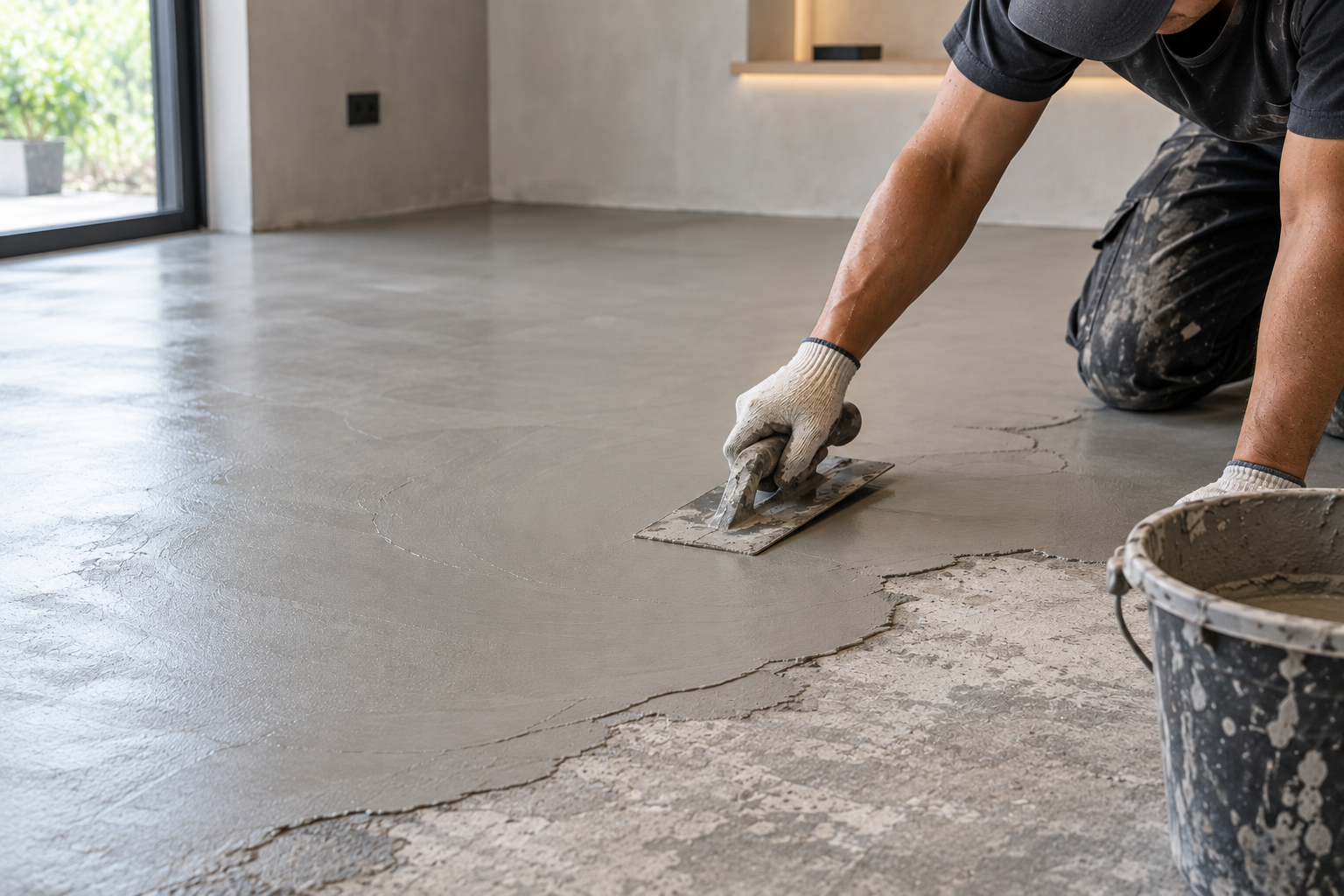
A professional microcement installation typically involves several stages.
Step 1: Site Assessment
The contractor should first assess the existing surface and determine whether it is suitable for microcement.
This is particularly important when applying microcement over existing tiles or other finishes.
Step 2: Surface Preparation
The substrate needs to be clean, stable and suitably prepared.
Existing cracks, loose areas or significant unevenness may need to be addressed before the microcement system is installed.
Step 3: Primer Application
A suitable primer is applied to help the subsequent layers bond properly to the substrate.
Step 4: Base Coat Application
The base layers establish the foundation of the finished surface.
Depending on the system, reinforcement may also be incorporated to help manage movement and improve the overall performance of the installation.
Step 5: Microcement Finish Coats
The decorative microcement layers are applied by hand.
The applicator’s technique influences the final colour variation, texture, and appearance.
Step 6: Sanding and Refinement
The surface may be sanded between stages to achieve the desired smoothness and finish.
Step 7: Sealing
A protective sealer or topcoat is applied to protect the surface against moisture, staining and everyday wear.
Step 8: Final Inspection
The completed surface should be inspected to ensure the finish, edges, transitions and protective coating meet the project requirements.
Is Microcement Waterproof?
Microcement should generally be considered water-resistant when correctly installed and sealed, rather than automatically waterproof.
This distinction is especially important in Singapore bathrooms and other wet areas.
A microcement surface relies on the complete system, including:
- Substrate preparation
- Waterproofing where required
- Appropriate microcement layers
- Correct sealing
- Proper maintenance
In a bathroom, simply applying microcement over an existing surface does not replace the need for proper waterproofing.
For shower areas and other areas exposed to prolonged water, discuss the complete waterproofing and sealing system with your contractor before installation.
What Are the Advantages of Microcement?
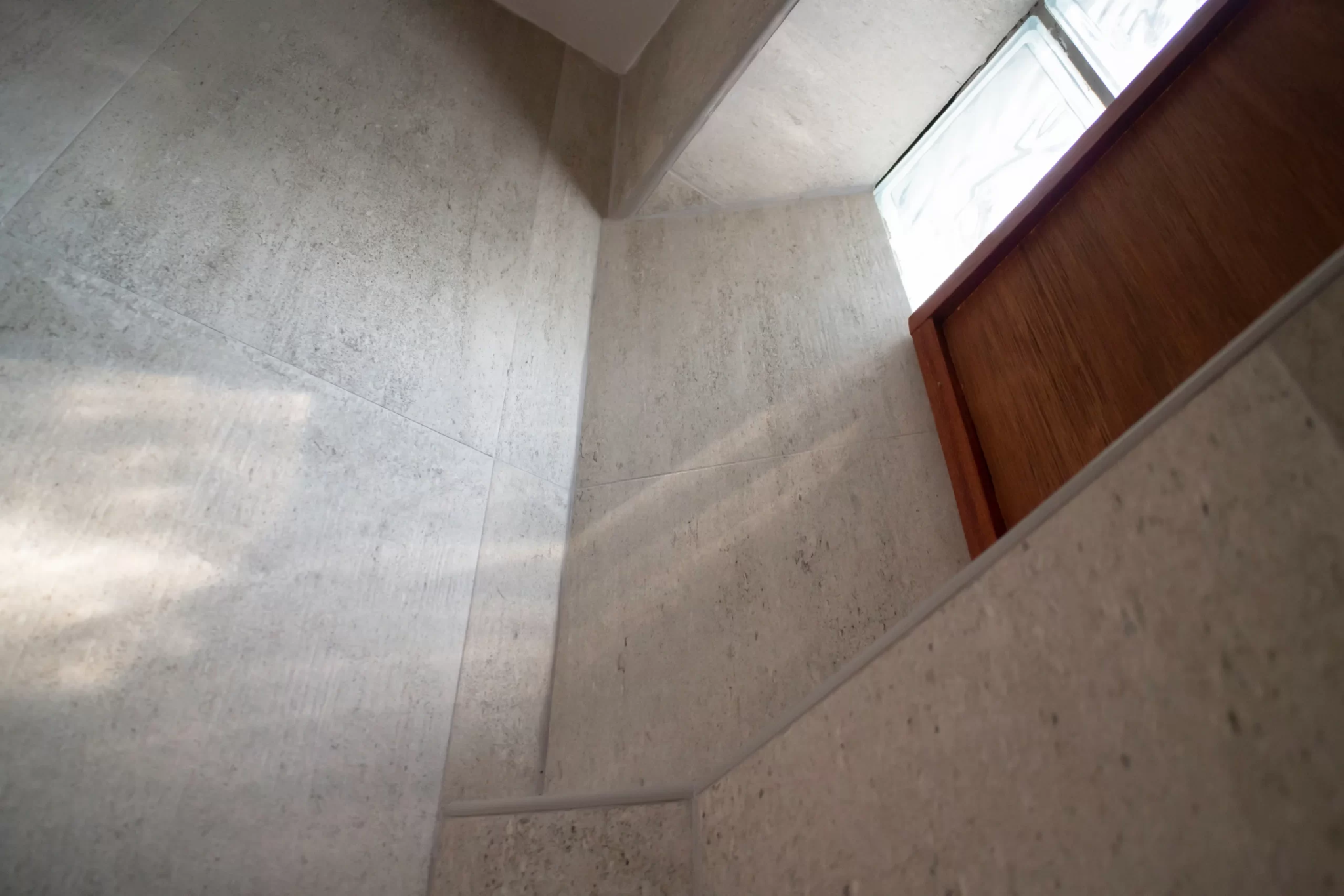
Seamless Appearance
Microcement provides a continuous surface without conventional grout lines.
Design Flexibility
It can be produced in different colours and finishes to suit different interior styles.
Multiple Applications
The same material concept can potentially be used across floors, walls, bathrooms, kitchens and other surfaces.
Thin Application
Its relatively thin profile makes it useful for certain renovation and overlay applications.
Unique Finish
Because microcement is typically hand-applied, each installation can have subtle variations that give it an individual character.
Suitable for Residential and Commercial Spaces
Microcement can work in both private homes and commercial environments where a contemporary architectural finish is desired.
What Are the Disadvantages of Microcement?
Microcement is not suitable for every project.
Risk of Cracking
Microcement can develop hairline cracks if the underlying substrate moves, settles or has existing problems.
Good surface preparation and appropriate installation techniques can reduce the risk, but no decorative cement-based finish should be assumed to be completely immune to movement.
Requires Skilled Installation
The finished appearance depends heavily on the applicator’s technique.
Poor application can result in:
- Uneven texture
- Blotchy colour
- Poor adhesion
- Rough areas
- Premature deterioration
Requires Maintenance
The protective sealer is an important part of the finished system and may eventually require maintenance or renewal depending on usage and the product manufacturer’s recommendations.
Repairs Can Be Difficult to Hide
Because microcement has a handcrafted appearance, matching an isolated repair to the surrounding surface can be challenging.
Higher Initial Cost
Microcement is generally positioned as a premium finish rather than a budget flooring solution.
How Do You Maintain Microcement?
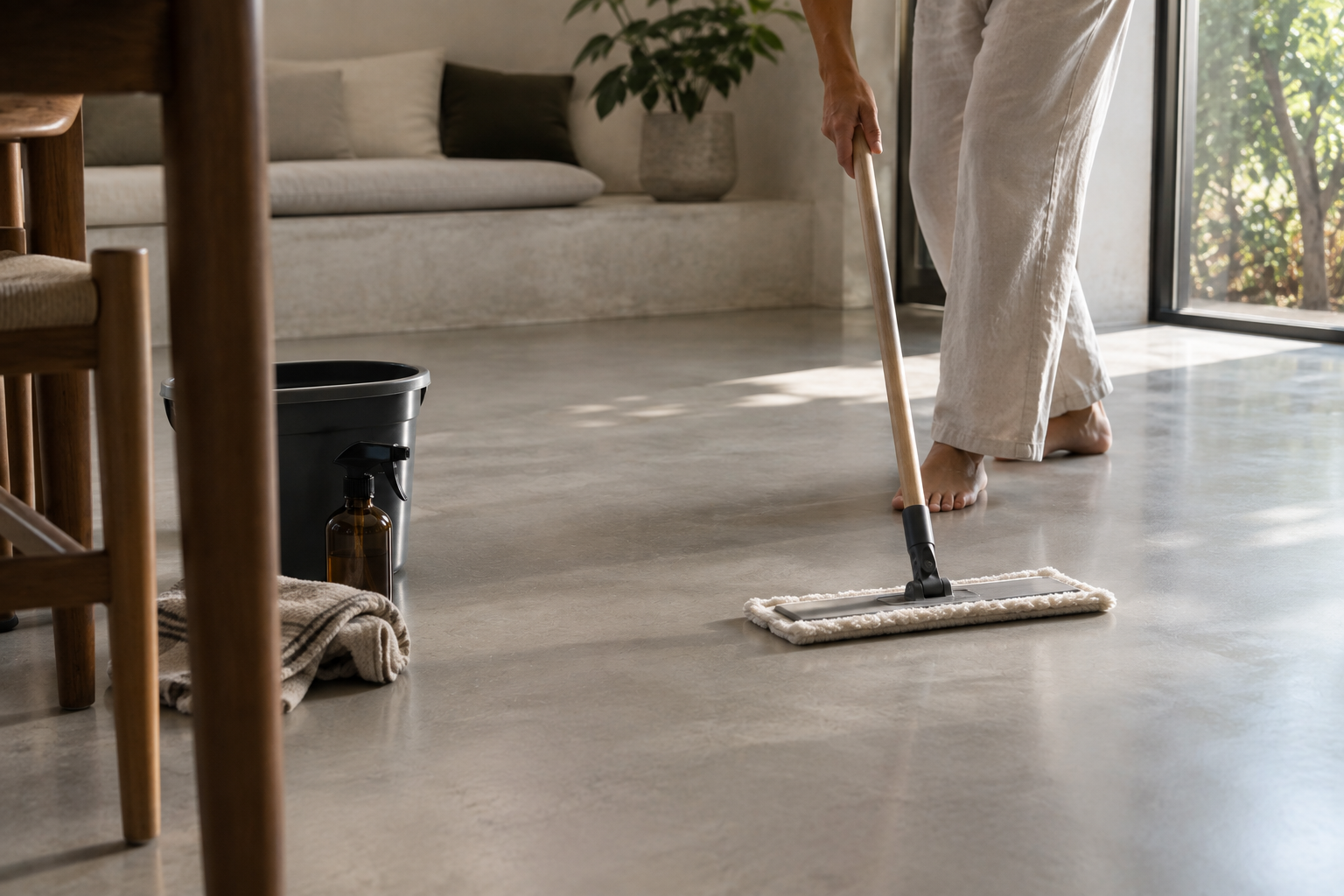
Proper maintenance can help preserve the appearance and performance of microcement.
Clean Regularly
Remove dust and dirt regularly using a soft brush, vacuum, or suitable cleaning method.
Use Suitable Cleaning Products
Use cleaning products recommended for the particular microcement and sealer system.
Avoid aggressive, abrasive, or highly acidic cleaning products unless specifically approved by the manufacturer.
Clean Spills Promptly
Although a properly sealed surface provides protection, spills should still be cleaned promptly, particularly substances that may stain or damage the protective coating.
Avoid Abrasive Cleaning
Scrubbing with harsh abrasive materials can gradually damage the protective finish.
Maintain the Sealer
The protective coating will experience wear over time, particularly in high-traffic areas.
Follow the manufacturer’s or contractor’s recommendations for maintenance and resealing.
Microcement vs Cement Screed
Microcement and cement screed can create a similar industrial aesthetic, but they are not the same material.
Microcement is a thin decorative coating applied over a suitable substrate, while traditional cement screed involves a substantially thicker cement-based layer.
Microcement is therefore often considered when homeowners want the appearance of concrete without installing a conventional thick screed floor.
The right choice depends on the existing structure, desired appearance, floor height, installation requirements, and budget.
Microcement vs Tiles
Tiles remain one of the most common flooring and wall finishes in Singapore.
Microcement offers:
- A seamless appearance
- No conventional grout lines
- A handcrafted finish
- Flexible colour and texture options
Tiles offer:
- A wide range of designs
- Established installation methods
- Easy replacement of individual damaged tiles
- Different price points
If you strongly prefer a continuous, minimalist appearance, microcement may be more suitable. If easy individual replacement and predictable patterns are priorities, tiles may be the better choice.
Microcement vs Vinyl Flooring
Concrete-look vinyl flooring can replicate some of the visual qualities of microcement while offering a different set of practical characteristics.
Vinyl is generally easier to maintain and can be available at a lower cost, while microcement provides a genuinely hand-finished surface with unique variations.
The better option depends on whether your priority is aesthetics, maintenance, budget, installation time, or long-term performance.
Is Microcement Suitable for HDB Flats?
Microcement can be considered for HDB renovation projects where the existing surface is suitable for an overlay system.
Its thin application and seamless appearance can be attractive in smaller homes, where continuous flooring can make the space feel more cohesive.
However, homeowners should still consider:
- Existing floor condition
- Floor levels
- Door clearances
- Wet-area requirements
- Renovation restrictions
- Contractor workmanship
Always confirm your renovation requirements before starting work.
Is Microcement Suitable for Condominiums?

Microcement can also be used in condominium units.
Overlay installation can be particularly attractive where homeowners want to update existing surfaces while reducing the need for extensive hacking.
However, condominium renovation works may be subject to management rules and restrictions. Check the requirements of your condominium management before beginning renovation work.
Common Microcement Problems and How to Avoid Them
Hairline Cracks
Usually associated with substrate movement, settlement or inadequate preparation.
How to reduce the risk: Ensure the substrate is properly assessed and prepared before installation.
Uneven Colour
Microcement has natural variation, but excessive inconsistency may indicate application issues.
How to reduce the risk: Work with an experienced applicator and review actual samples or completed projects.
Peeling or Poor Adhesion
This can occur when the substrate has not been correctly prepared.
How to reduce the risk: Proper cleaning, priming, and substrate preparation are essential.
Water Damage
This can occur when wet areas are inadequately waterproofed or sealed.
How to reduce the risk: Confirm the complete waterproofing and sealing system before installation.
Visible Repairs
Repairs can sometimes remain visible because microcement is a hand-finished material.
How to reduce the risk: Address substrate and installation issues early and maintain the protective coating properly.
How to Choose a Microcement Contractor in Singapore
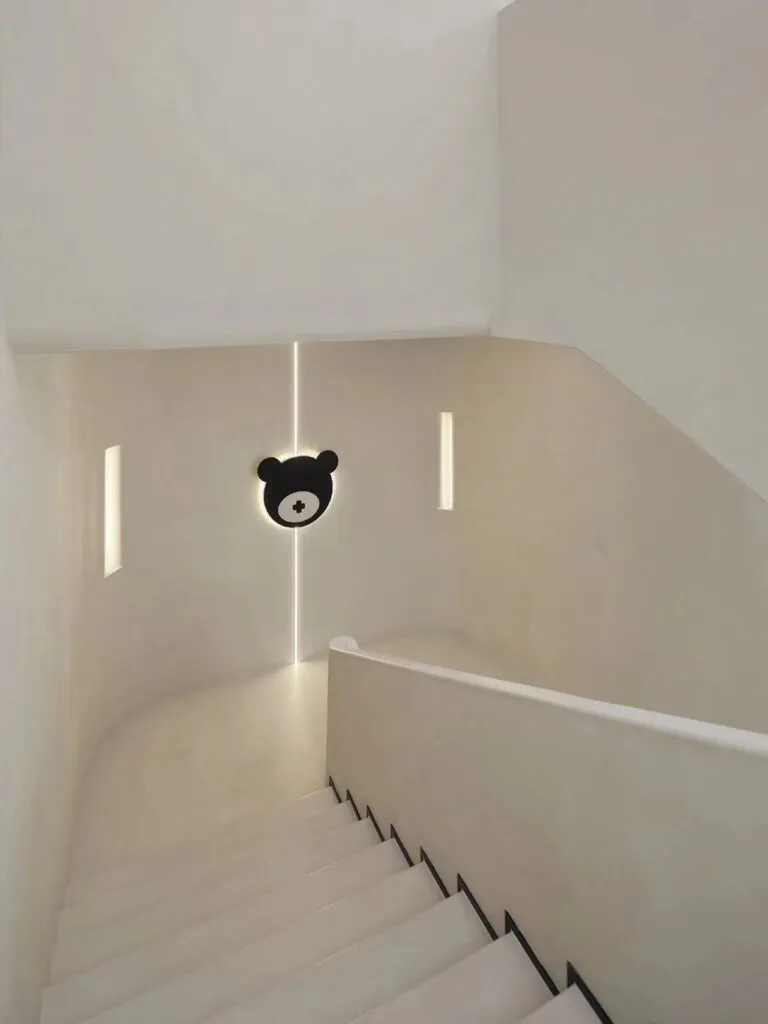
Choosing the right installer is just as important as choosing the material.
Before engaging a contractor, consider the following.
Look at Previous Projects
Ask to see completed microcement installations rather than relying solely on product samples.
Ask About Surface Preparation
Find out exactly how the contractor prepares your existing surface.
Understand the Full System
Ask what primer, base coat, finish coat, and sealer will be used.
Check Wet-Area Requirements
If microcement will be installed in a bathroom or shower, ask specifically about waterproofing and slip resistance.
Understand the Quotation
Make sure you know what is included and what may be charged separately.
Ask About Maintenance
Find out how the finished surface should be cleaned and when the protective coating may need maintenance.
Microcement Design Ideas for Singapore Homes
Microcement can be adapted to different interior concepts.
Minimalist Grey
Classic grey microcement works well with clean lines, neutral furniture and contemporary interiors.
Warm Beige
Beige and sand-coloured microcement can create a warmer appearance than traditional concrete grey.
Wabi-Sabi
The natural tonal variation of hand-applied microcement complements interiors that embrace texture and imperfection.
Microcement Bathroom
Use the same finish across selected bathroom walls and floors to create a seamless, spa-inspired environment.
Feature Wall
A microcement feature wall can introduce texture without requiring the material throughout the entire home.
Kitchen
Microcement can be used on selected kitchen surfaces to create a cohesive, contemporary appearance.
Is Microcement Worth It in Singapore?
Microcement can be an excellent choice if you want:
- A seamless finish
- A contemporary aesthetic
- A concrete-inspired appearance
- A handcrafted surface
- Flexible colour options
- A material that can be used across different surfaces
However, it may not be the right choice if your priorities are:
- The lowest possible renovation cost
- Minimal maintenance
- Completely uniform appearance
- Easy individual replacement
- Zero risk of substrate-related cracking
Ultimately, microcement is best viewed as a design finish rather than simply another type of flooring.
Its value comes from the combination of its appearance, versatility, and handcrafted character.
Why Choose Marble Furnishing for Microcement in Singapore?

Choosing the right installer is an important part of achieving a quality microcement finish.
At Marble Furnishing, our microcement services are designed to help homeowners and property owners achieve a seamless, contemporary finish suited to their space.
From surface preparation and application to finishing, each stage contributes to the final appearance and performance of the surface.
Whether you are considering microcement flooring, walls, bathrooms or other applications, a professional assessment can help determine whether microcement is suitable for your existing surface and project requirements.
Looking for microcement services in Singapore? Contact Marble Furnishingto discuss your project and request a quotation.
Address: 2 Kallang Pudding #08-15 (Mactech Building), Singapore 349307
Email: info@marblefurnishing.com
Contact No:
+(65) 6570 1723 – HQ
+(65) 9424 2461 – Henry
+(65) 9644 3388 – Alvin
Maintaining Your Property Beyond Microcement
For commercial properties, landed homes and other buildings, maintaining the appearance of the property involves more than interior finishes.
Exterior surfaces are regularly exposed to Singapore’s weather, rain, humidity, dirt and environmental pollutants. Regular professional cleaning can help maintain the appearance of building facades and other exterior surfaces.
Marble Furnishing also provides facade cleaning services in Singapore for property owners looking to maintain their building exteriors.
Frequently Asked Questions About Microcement in Singapore
How much does microcement cost in Singapore?
Microcement flooring can cost approximately S$25 to S$50 per square foot based on current published Singapore market estimates, although actual prices depend on surface preparation, application area, finish, waterproofing and other project requirements.
Can microcement be applied over existing tiles?
Yes, microcement can potentially be applied over existing tiles if the substrate is stable and properly prepared. The tiles must be assessed before installation.
Is microcement waterproof?
Microcement is generally water-resistant when correctly installed and sealed. It should not automatically be considered a replacement for proper waterproofing, particularly in bathrooms and shower areas.
Can microcement be used in bathrooms?
Yes. Microcement can be used on bathroom floors, walls and shower areas when the appropriate waterproofing, surface preparation, sealing and slip-resistance measures are used.
Does microcement crack?
Microcement can develop hairline cracks, particularly when the underlying substrate moves or has not been properly prepared. Good installation practices can reduce the risk but cannot guarantee that cracking will never occur.
How long does microcement last?
The lifespan depends on the product system, installation quality, usage and maintenance. High-traffic areas may require more frequent maintenance of their protective coating.
Is microcement better than tiles?
Neither material is universally better. Microcement is particularly attractive for homeowners who prioritise a seamless, contemporary and handcrafted finish, while tiles offer predictable patterns, broad design choices and easier individual replacement.
Can microcement be used in an HDB flat?
Microcement can be considered for HDB renovations where the existing substrate and renovation requirements are suitable. Homeowners should assess floor levels, surface condition, and relevant renovation requirements before installation.
How do you clean microcement?
Microcement should generally be cleaned with suitable, non-abrasive cleaning products recommended for the installed system. Harsh or acidic cleaners should be avoided unless approved by the manufacturer.
Should I choose microcement for my entire home?
Not necessarily. Some homeowners use microcement throughout their home for a consistent appearance, while others use it selectively for living areas, bathrooms, kitchens or feature walls. The best approach depends on your budget, lifestyle and desired design.
Get a Microcement Quote in Singapore
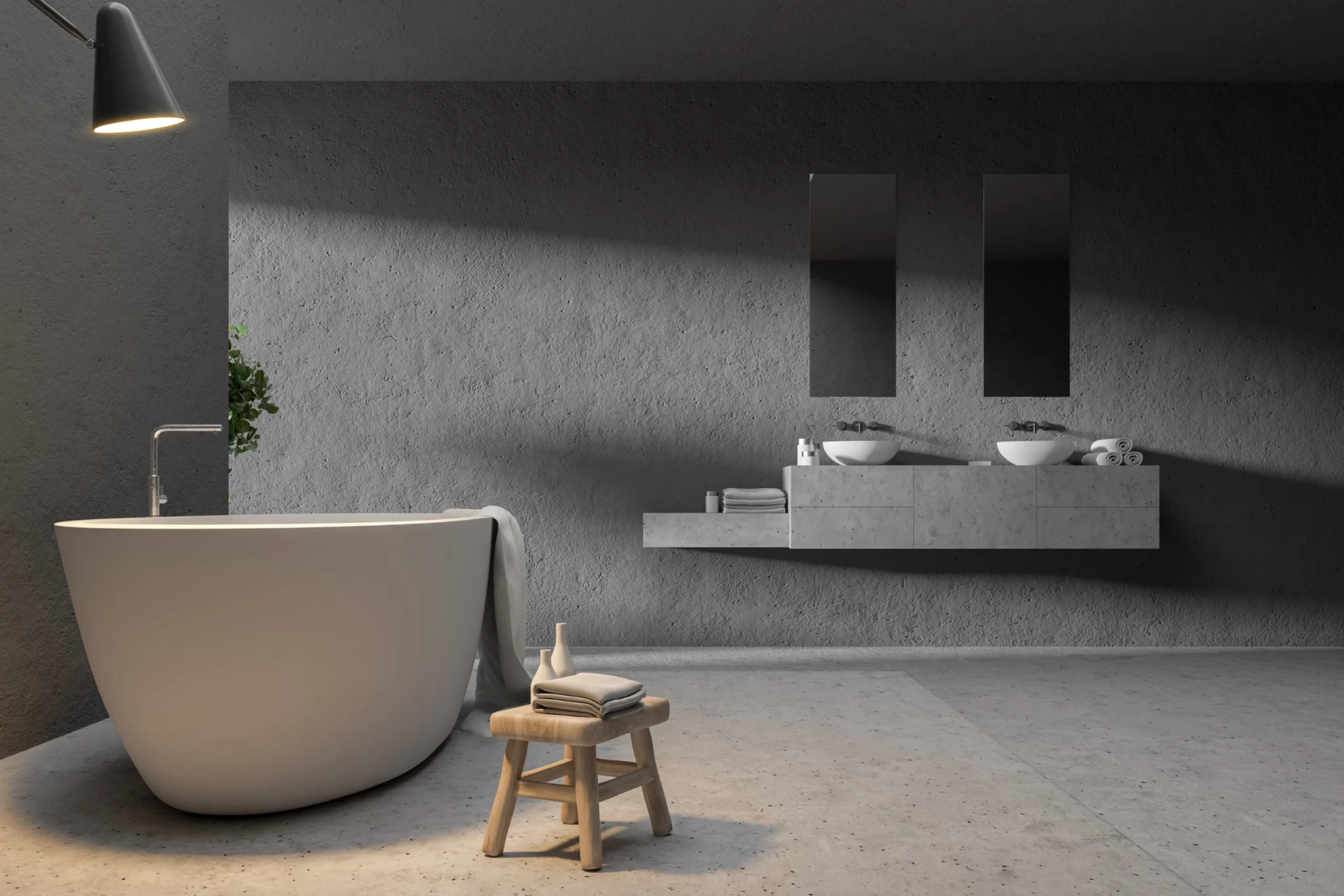
Microcement can transform an ordinary surface into a seamless, contemporary feature that works across a wide range of residential and commercial environments.
However, achieving a quality result depends on more than the material itself. Proper surface preparation, skilled application, suitable waterproofing, and a high-quality protective finish all play an important role.
If you are considering microcement in Singapore, Marble Furnishing can help you assess your project and determine whether microcement is suitable for your space.
Contact Marble Furnishing todayto discuss your microcement project and request a quotation.
Address: 2 Kallang Pudding #08-15 (Mactech Building), Singapore 349307
Email: info@marblefurnishing.com
Contact No:
+(65) 6570 1723 – HQ
+(65) 9424 2461 – Henry
+(65) 9644 3388 – Alvin