
Flexible stone has become a popular choice for homeowners, designers, and businesses looking for the look of natural stone without the weight and installation challenges of traditional slabs.
Its versatility makes it suitable for everything from feature walls to commercial interiors. If you are considering flexible stone for your next project, here’s what you should know about the installation process, its benefits, and what to expect before getting started.
Why Flexible Stone is Catching Attention in Modern Interiors
Flexible stone is a thin layer of natural stone bonded to a backing material such as fibreglass or cotton. This process creates a lightweight stone veneer that retains the texture, patterns, and appearance of real stone while being significantly lighter than conventional stone panels.
Because of its flexibility, it can be installed on surfaces that may be difficult or costly to clad with traditional stone.
Property owners and designers often choose flexible stone because it offers:
A Natural Stone Appearance
Each sheet contains genuine stone, meaning no two panels look exactly alike.
Reduced Structural Load
Flexible stone weighs substantially less than marble or granite slabs, making it suitable for walls, ceilings, furniture, and renovation projects.
Design Versatility
It can be applied to flat, curved, and irregular surfaces.
Simplified Installation
Installation is generally quicker and requires fewer structural considerations compared to thick stone slabs.
Suitable for Residential and Commercial Spaces
Flexible stone is commonly used in homes, hotels, restaurants, offices, feature walls, and retail interiors.
Where Flexible Stone Works Best
One of the biggest advantages of flexible stone is its versatility. Its lightweight construction and ability to conform to different surfaces make it suitable for a wide range of residential and commercial applications.
These include:
Feature Walls
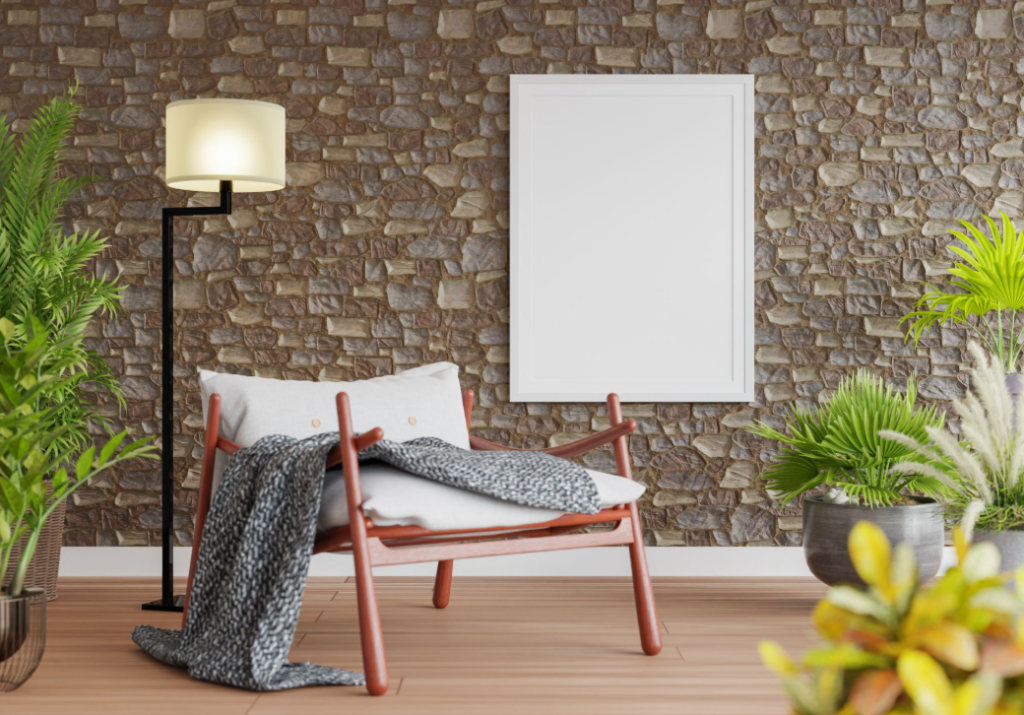
Flexible stone is often used to create statement walls in living rooms, bedrooms, lobbies, reception areas, and retail spaces. The natural textures and patterns of stone introduce visual depth while maintaining a clean and contemporary look.
Common applications include:
- Living room feature walls
- Bedroom accent walls
- Reception areas
- Hotel lobbies
- Retail interiors
- Television feature walls
Interior Walls
Unlike conventional stone slabs, flexible stone can be installed on a variety of interior surfaces without placing significant additional load on the structure. This makes it an attractive option for renovations, fit-outs, and spaces where weight considerations are important.
It’s commonly specified for:
- Residential interiors
- Offices
- Restaurants
- Cafes
- Commercial fit-outs
- Showrooms
Building Facades
Flexible stone can also be incorporated into selected exterior applications, helping property owners achieve the appearance of natural stone without the installation complexities associated with heavier cladding materials.
Its lightweight nature may offer advantages in facade designs where reducing overall structural weight is a consideration.
Columns and Curved Surfaces
One of the standout features of flexible stone is its ability to adapt to shapes that are challenging for traditional stone materials.
It can be applied to:
- Curved walls
- Columns
- Reception counters
- Decorative panels
- Rounded architectural details
- Custom furniture elements
This flexibility opens up more design possibilities while preserving the authentic texture and character of natural stone.
The Surface Preparation That Makes Installation Last
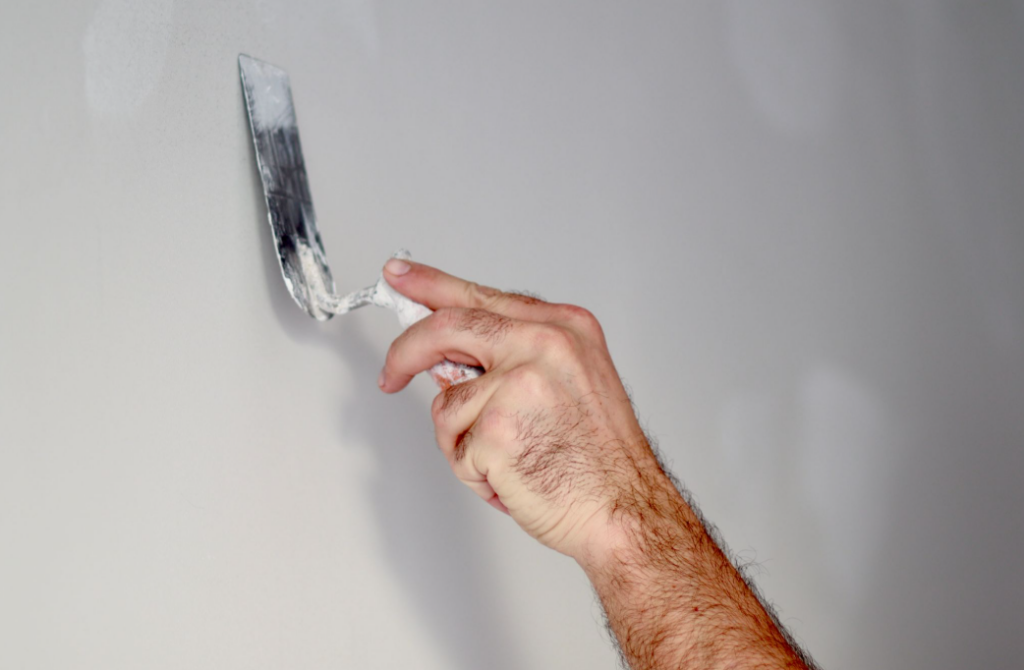
Even the best stone veneer products rely on proper preparation.
Before installation begins, the substrate should be:
- Clean
- Dry
- Stable
- Free from dust
- Free from loose particles
- Even and smooth where required
Flexible stone can typically be installed on surfaces such as:
- Cement render
- Gypsum board
- Plasterboard
- MDF panels
- Existing wall finishes in suitable conditions
- Plywood substrates for selected applications
Any cracks, uneven sections, or moisture-related issues should be addressed beforehand.
A well-prepared surface contributes to better adhesion, a cleaner finish, and improved long-term durability.
What to Expect During Flexible Stone Installation
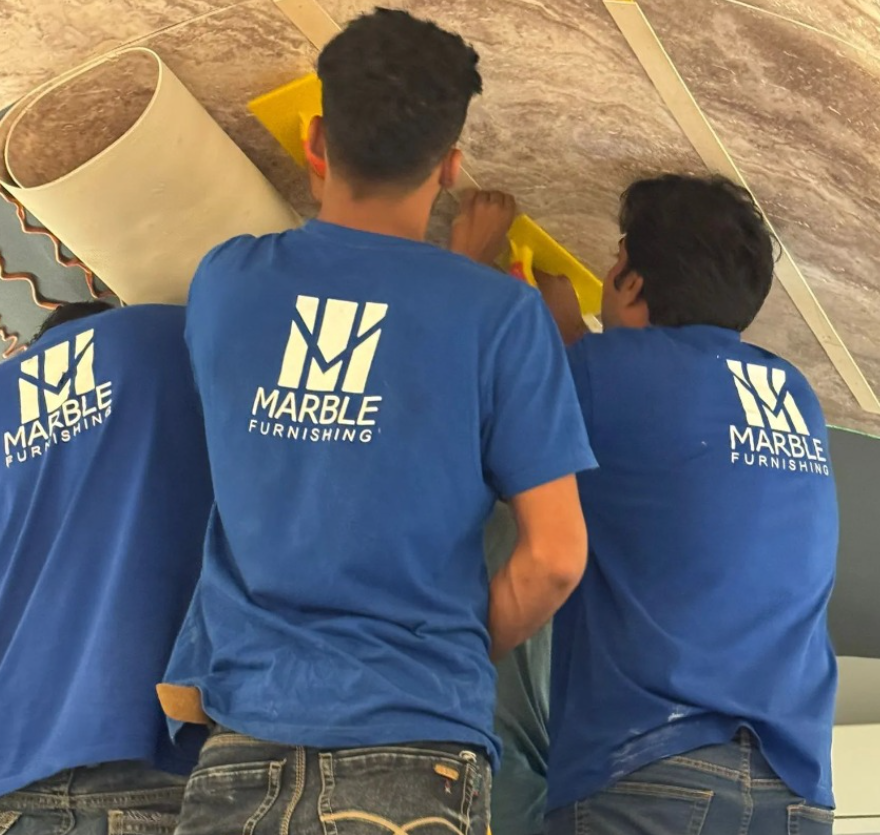
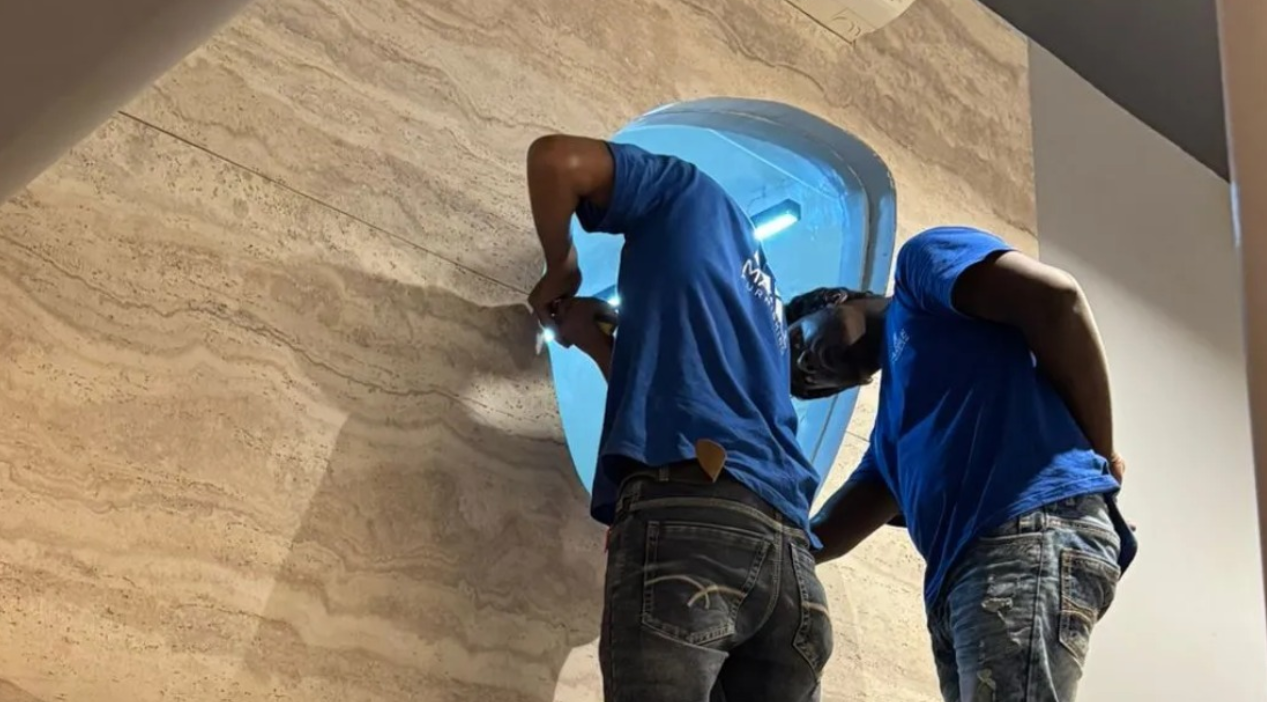
Flexible stone installation is generally efficient when completed by experienced installers. While methods may vary depending on the project, the process typically includes the following stages:
1. Assessing and Planning the Installation Area
Installers begin by measuring the space and determining the most suitable panel layout. This stage considers:
- Panel orientation
- Pattern consistency
- Joint placement
- Edge details
- Lighting conditions
Since flexible stone is made from natural stone, careful planning helps create a cohesive and visually balanced finish.
2. Cutting the Flexible Stone Sheets
The sheets are trimmed to suit the dimensions of the installation area, particularly around corners, electrical outlets, and built-in elements.
Depending on the project requirements, installers may use:
- Utility knives
- Precision cutting tools
- Circular cutting equipment
3. Applying Adhesive
A suitable adhesive is selected based on the substrate and intended application. It is applied evenly to promote proper bonding and minimise the risk of uneven surfaces or trapped air pockets.
4. Installing and Securing the Panels
Once positioned correctly, the flexible stone sheets are pressed firmly onto the substrate. Rollers or specialised tools are often used to ensure even contact across the surface.
This helps achieve:
- Strong adhesion
- Smooth finishes
- Reduced risk of edge lifting
- A cleaner overall appearance
5. Refining the Finishing Details
Edges, corners, and transitions are completed to create a polished result. Depending on the design intent, installers may incorporate:
- Seamless joins
- Minimal visible joints
- Decorative edge treatments
Common Installation Challenges to Consider
Although flexible stone is often easier to install than conventional stone cladding, proper workmanship remains essential for achieving a refined and durable finish.
Common challenges include:
Uneven Surfaces
Substrates with imperfections can affect adhesion and create visible inconsistencies. Proper surface preparation remains one of the most important stages of installation.
Incorrect Adhesive Selection
Different applications may require different adhesive systems. Using unsuitable products can affect durability and long-term performance.
Poor Alignment
Natural stone patterns require careful positioning. Misaligned sheets can disrupt the visual flow, particularly across larger feature walls.
Insufficient Pressure During Installation
Air pockets may form if the panels are not pressed evenly during installation, potentially affecting both appearance and adhesion.
Professional installation helps minimise these risks and contributes to a cleaner, more refined finish.
Flexible Stone Compared With Traditional Stone
For many property owners, the decision comes down to balancing aesthetics, cost considerations, installation requirements, and maintenance expectations.
| Consideration | Flexible Stone | Traditional Stone |
| Weight | Lightweight | Heavy |
| Installation complexity | Relatively simpler | More labour intensive |
| Curved applications | Suitable | Limited |
| Structural load | Lower | Higher |
| Natural appearance | Yes | Yes |
| Renovation suitability | Excellent | Depends on structure |
Why Professional Installation Often Delivers Better Results
Flexible stone may appear easier to install compared to conventional stone cladding, but experience still makes a noticeable difference.
Professional installers understand:
- Substrate compatibility
- Adhesive performance
- Pattern matching
- Joint detailing
- Finishing techniques
- Installation best practices
This expertise helps achieve a cleaner finish while reducing the likelihood of rework or premature issues.
For homeowners and businesses investing in premium interior finishes, quality installation can have a significant impact on the final result.

Why Choose Marble Furnishing for Flexible Stone Installation
Choosing the right installer is just as important as choosing the right material. At Marble Furnishing, we provide complete flexible stone solutions, from installation through to long-term care, so you can work with one experienced team throughout your project.
Here’s what sets our flexible stone installation service apart:
Guaranteed Workmanship You Can Trust
Every project is backed by our workmanship guarantee, giving you added confidence in the quality of our installation.
Expertise Across a Wide Range of Surfaces
Our team has experience working with marble, natural stone, microcement, tiles, and other surface finishes. This allows us to recommend suitable installation methods for different project requirements.
Complete Surface Solutions Under One Roof
Beyond flexible stone installation, we also provide polishing, restoration, and maintenance services, helping you save time while working with a single trusted specialist.
Have a project in mind or need advice before getting started? Contact our team today to discuss your requirements or ask us any questions about flexible stone installation.
Getting Flexible Stone Installation Right
Flexible stone offers a practical way to achieve the look of natural stone across a wide range of interior and exterior applications.
While its lightweight nature and flexibility can simplify installation compared to traditional stone, proper surface preparation, careful planning, and skilled workmanship remain essential for achieving a durable, high-quality finish.
Understanding these factors can help you plan your project more effectively and set realistic expectations for the installation process.